The Truth About Trading In a Car You Still Owe Money On
![[HERO] The Truth About Trading In a Car You Still Owe Money On](https://cdn.marblism.com/CJtLwGnsX41.webp)
If you are driving around Arnold, MO right now thinking you are stuck in your current car because you still owe money on it, you are not alone. This is one of the most common concerns we hear at Grateful Motors. People assume that having a balance on their loan means they cannot trade in their vehicle until it is completely paid off.
Here is the good news: that is not true.
You absolutely can trade in a car you still owe money on. But there are some things you need to understand before you walk into any dealership. We believe in being upfront with you, so let us break down exactly how this works, what negative equity means, and how we help Arnold drivers move into a more reliable vehicle: even when their current loan is not paid off yet.
What Does It Mean to Trade In a Car You Still Owe On?
When you finance a vehicle, the lender holds the title until you pay off the loan. If you want to trade that car in before the loan is complete, the dealership works directly with your lender to pay off the remaining balance as part of the transaction.
Sounds simple enough, right? It can be. But the key factor that determines how smooth this process goes is something called equity.
Positive equity means your car is worth more than what you owe. For example, if your vehicle is valued at $12,000 and you only owe $9,000, you have $3,000 in positive equity. That $3,000 can go toward your next vehicle as a down payment.
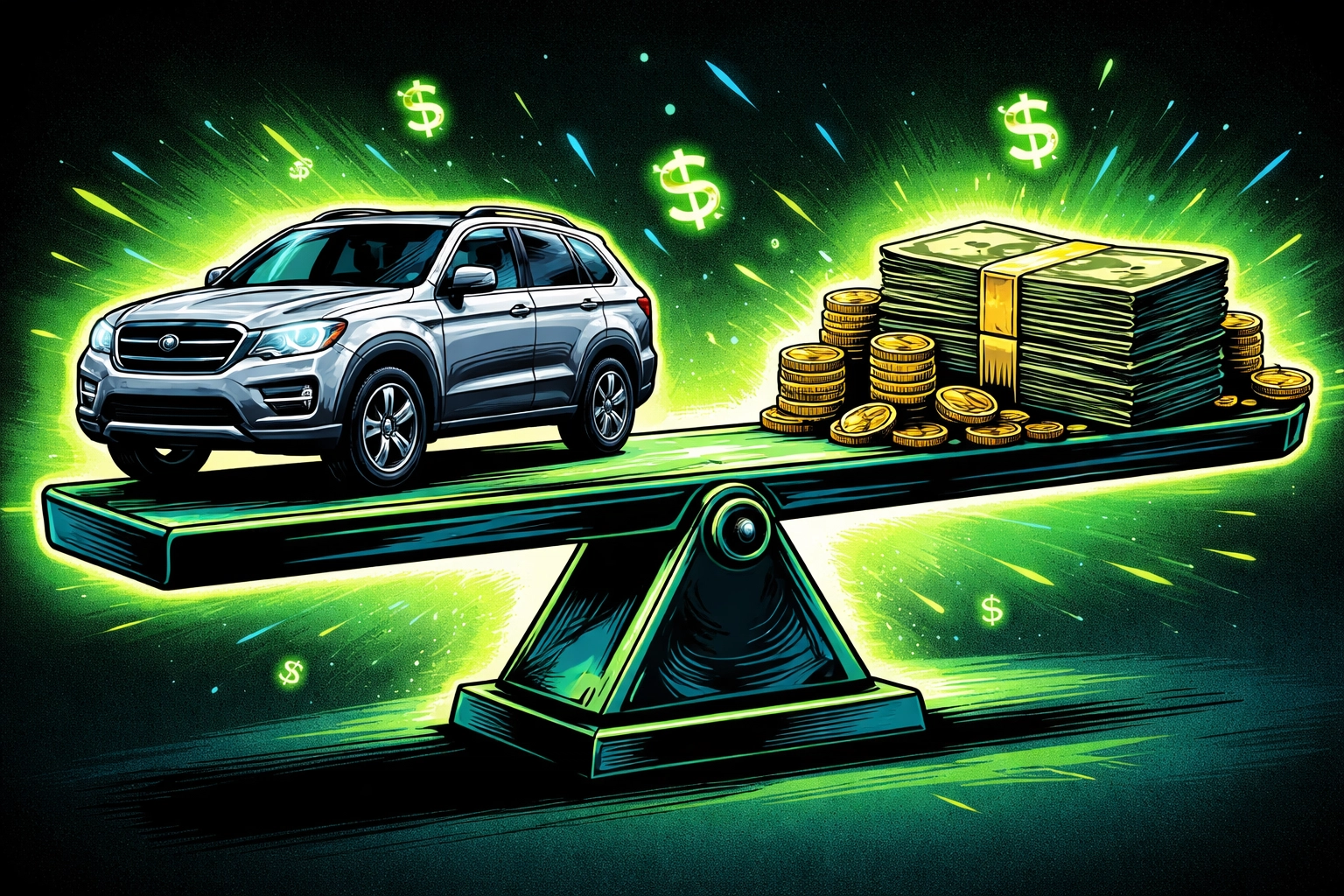
Negative equity is the opposite. If your car is worth $12,000 but you owe $15,000, you are $3,000 underwater. This is also called being "upside-down" on your loan.
Why Does Negative Equity Happen?
Negative equity is more common than you might think, and it is nothing to be embarrassed about. Several factors can cause it:
Rapid depreciation. New cars can lose up to 20 percent of their value in the first year alone. If you bought new and have only made a year or two of payments, the math might not be in your favor yet.
Long loan terms. Stretching a loan to 72 or 84 months keeps payments lower, but the car depreciates faster than you are paying it down.
Low or no down payment. Starting a loan with little money down means you are financing more than the car is worth from day one.
High interest rates. When a big chunk of your monthly payment goes toward interest instead of principal, you build equity slower.
Rolling over previous negative equity. If you traded in an upside-down car before and rolled that balance into your current loan, you started underwater again.
None of these situations are your fault for being irresponsible. Life happens. Rates are what they are. And sometimes you just need a car and have to work with the options available to you at the time.
How Dealerships Handle Negative Equity
You have probably seen ads that say "We will pay off your loan no matter how much you owe!" That sounds great, but let us be honest about what that actually means.
Dealerships do not typically eat that negative equity cost themselves. Instead, the remaining balance gets rolled into your new loan. So if you are $3,000 upside-down and you buy a $15,000 vehicle, you are now financing $18,000 (plus taxes, fees, and any other costs).
This is not necessarily a bad thing. Sometimes it makes sense. But you need to go in with your eyes open so you understand exactly what you are signing up for.

The Real Financial Impact
We are not here to scare you away from trading in a car with negative equity. But we do want you to understand the potential consequences so you can make the best decision for your situation.
Higher monthly payments. You are financing more money, so your payment will likely be higher than if you waited until you had positive equity.
More interest over time. You are paying interest on that rolled-over balance in addition to the new car's price.
Starting underwater again. If you roll negative equity into a new loan, you begin that loan already owing more than the car is worth.
Potential cycle of debt. If you keep trading in while upside-down, the negative equity can snowball over multiple vehicles.
For some people, these trade-offs are worth it: especially if your current car is unreliable, costing you money in repairs, or just not meeting your family's needs anymore. For others, it might make more sense to wait a bit longer.
When Trading In With Negative Equity Makes Sense
There are definitely situations where moving forward with a trade-in is the right call, even if you are upside-down:
Your current car is unreliable. If you are spending hundreds every month on repairs, those costs add up fast. A more dependable vehicle could actually save you money in the long run.
Your needs have changed. Maybe you had a baby, started a new job with a longer commute, or need something with better fuel economy. Life does not wait for your loan to catch up.
You found a great deal. Sometimes the numbers work out where trading in now: even with negative equity: puts you in a better position than waiting.
Your current payment is unmanageable. If you are struggling to make payments on a car that is too expensive, trading into something more affordable (even with rolled-over equity) might give you breathing room.

How Grateful Motors Helps Arnold Drivers Navigate This
At Grateful Motors, we work with folks in this exact situation every single week. Here is how we approach it:
We give you a straight answer. When you bring your car in for a trade appraisal, we tell you exactly what it is worth and how that compares to your payoff amount. No games, no guessing.
We explore all your options. Sometimes rolling over negative equity makes sense. Sometimes waiting a few months is smarter. Sometimes there is a vehicle on our lot that fits your budget better than you expected. We walk through everything with you.
We work with lenders who understand real-life situations. Our financing partners are used to working with all kinds of credit situations: including trade-ins with negative equity. We can often find solutions that other dealerships cannot.
We keep it simple. You do not need to contact your lender or deal with complicated paperwork. We handle the payoff directly and make the transition as smooth as possible.
If you are curious about your trade-in value, you can get a quick estimate here without any obligation.
Tips Before You Trade In
Before you make any decisions, here are a few things worth doing:
Know your payoff amount. Call your lender or check online to get the exact number you owe: not just your remaining payments, but the actual payoff figure.
Research your car's value. Check resources like Kelley Blue Book, Edmunds, or NADA Guides to get a ballpark idea of what your vehicle is worth.
Do the math. Subtract your car's value from your payoff amount. If the number is negative, that is your negative equity.
Consider your monthly budget. Think about what payment you can realistically afford on your next vehicle, including any rolled-over balance.
Be honest with yourself. Is trading in now the best move, or would waiting six months put you in a much better position?
Ready to Talk?
If you are an Arnold, Imperial, or Barnhart driver feeling stuck in a car that is not working for you anymore, come talk to us. We will give you the real numbers, walk you through your options, and help you figure out the best path forward: no pressure, no gimmicks.
You can browse our current inventory to see what is available, or fill out a credit application to get pre-approved before you even step foot on the lot.
Trading in a car you still owe money on is not as complicated as it seems. You just need a dealership that is willing to be straight with you about how it all works.
That is what we are here for.